
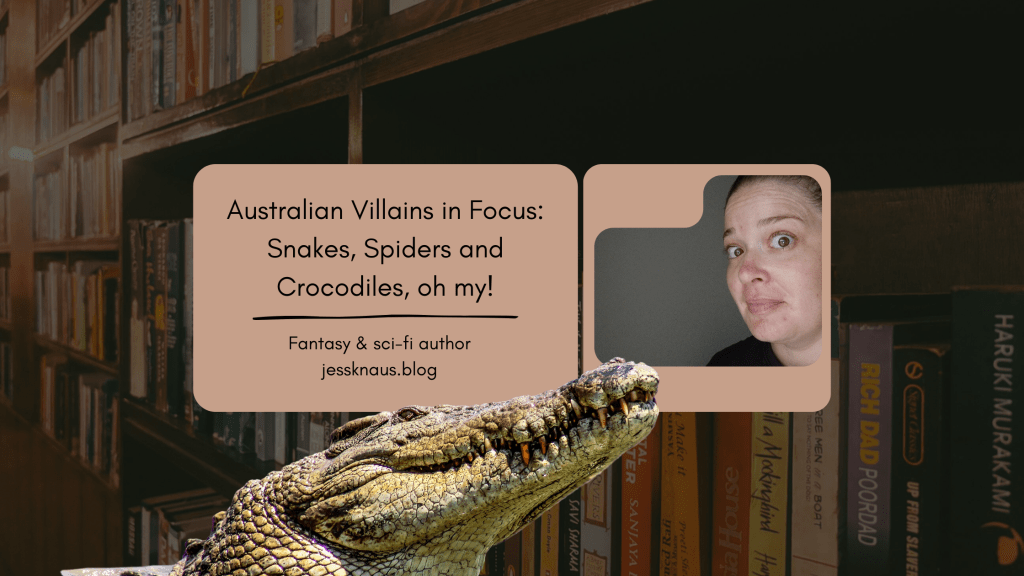
As an Aussie, let me share some thoughts on how these villains can inspire us, especially the villains we create in our books as authors. Australian creatures are dangerous, scary and highly venomous. But are they really the villain the world says they are? What is a villain anyway?
It’s well-known that Australia is the home of some of the most dangerous, venemous and freaky creatures you’re likely to meet on this Earth. I’m keen for someone (perhaps myself!) to write more stories about them because personally, I think they are beautiful, despite their ferocity. Tourists love the idea of patting a koala or kangaroo, but ask them to dive into the ocean with our sharks and you’ll hear a big, ‘NOPE!’. Tell them to touch a snake and you’ll watch them flinch. Show them a spider and their skin will crawl visibly before your very eyes.
I want to share a different perspective on our wildlife, and offer an inside look at why these villains are not as frightning as they seem. I also want to offer some common sense in how to behave when you see one of these beasts!
I recently visited the Australian Reptile Park, so let me introduce some of the friends I met on this visit (you hear me correctly, I said “friends”).
#1 The Perentie
The fourth largest lizard in the world.
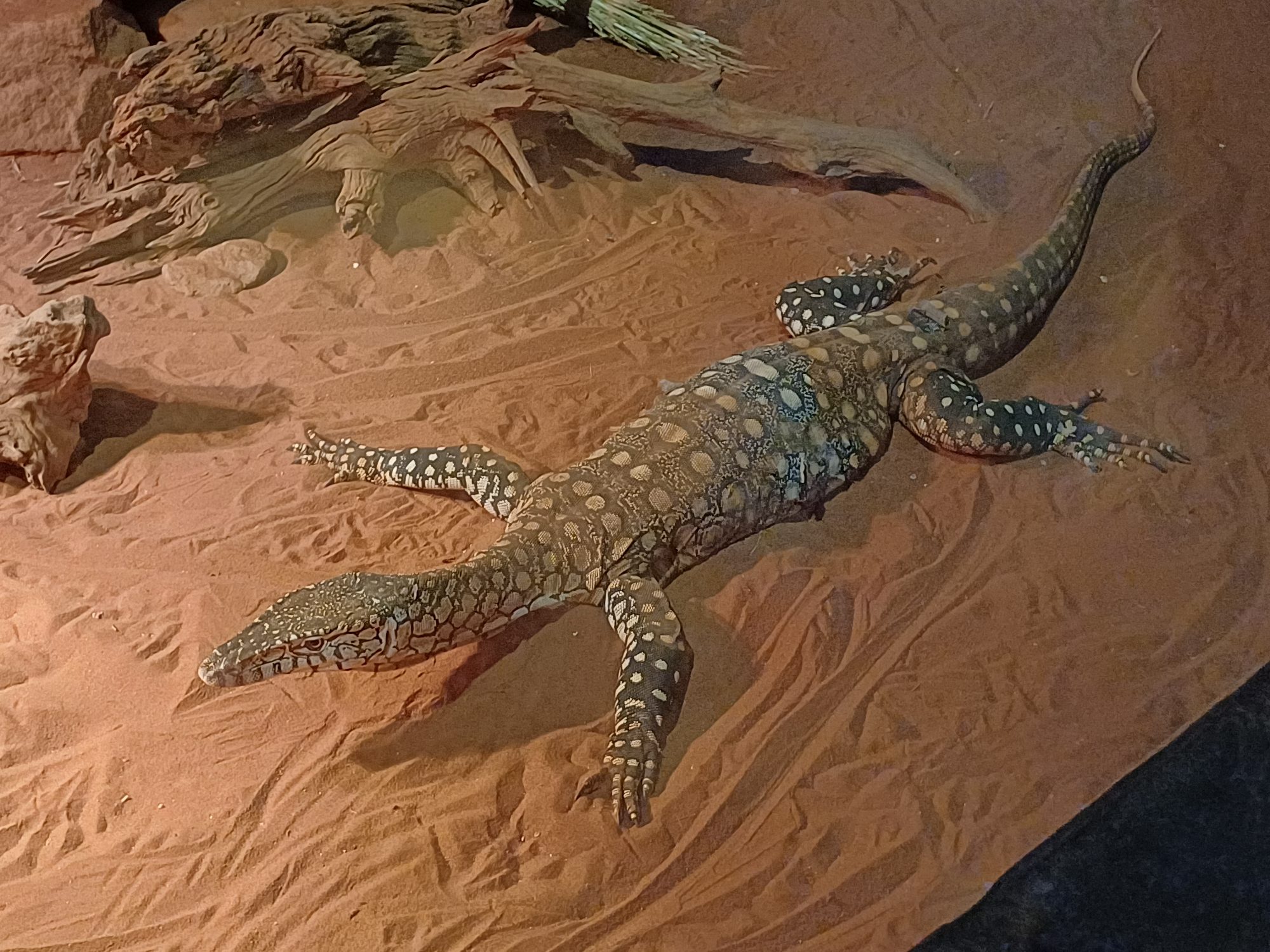
In Australia we love a good lizard, goanna or monitor. But the perentie is special. You’ll find this species mostly in arid regions of Australia, and it’s the largest lizard species on this continent (fourth largest in the world, too). They’re incredibly shy, live in fairly remote areas, and in most cases if you are near one they’ll freeze in position or scamper away. Previously it was believed that if a Perentie bit you, bacteria in its mouth would trigger an infection on the bite site. But researchers have since learnt that monitors like the Perentie do in fact carry mild venom. It’s been noted that effects can include swelling on the bite site, localised disruption of blood clotting and shooting pain. Sounds delightful.
But aside from all the scary stuff in my last paragraph did you catch a detail? In most cases if they see you, they’ll freeze in position of scamper away.
This detail goes missing a lot when people discuss our lizards, snakes and spiders. If any Aussie sees a snake in their backyard they usually respond with the following:
a) leave it alone and let it pass by, and
b) call a snake catcher, who safely gathers it, and either relocates it to the bush or takes it to a venom centre to have its venom extraced, before releasing it into the wild.
I’ve heard a personal story of a bike rider in Alice Springs cruising through the bush when they saw a Parentie pop up on the side of the footpath. In a moment of concern this rider slowed down, and stopped. Holding still, the Perentie eventually moved off the path. All was well. I’ve seen footage of a snake catcher in Queensland who demonstrated how his movement make a brown snake freakout and have a go at him, but when he stopped moving the snake simply slithered away. Their behaviour is dictacted by ours.
As someone that creates villains in my books and short stories, this is a fascinating take. Villains aren’t just evil for evil’s sake – something or someone prompts a reaction. The reaction can be completely overblown, sure. But very rarely are these characters evil for the sake of being evil. I doubt the idea of being evil or villainous without cause ever crosses their reptilian minds.


#2 Elvis the saltwater crocodile
He ate two of his girlfriends.
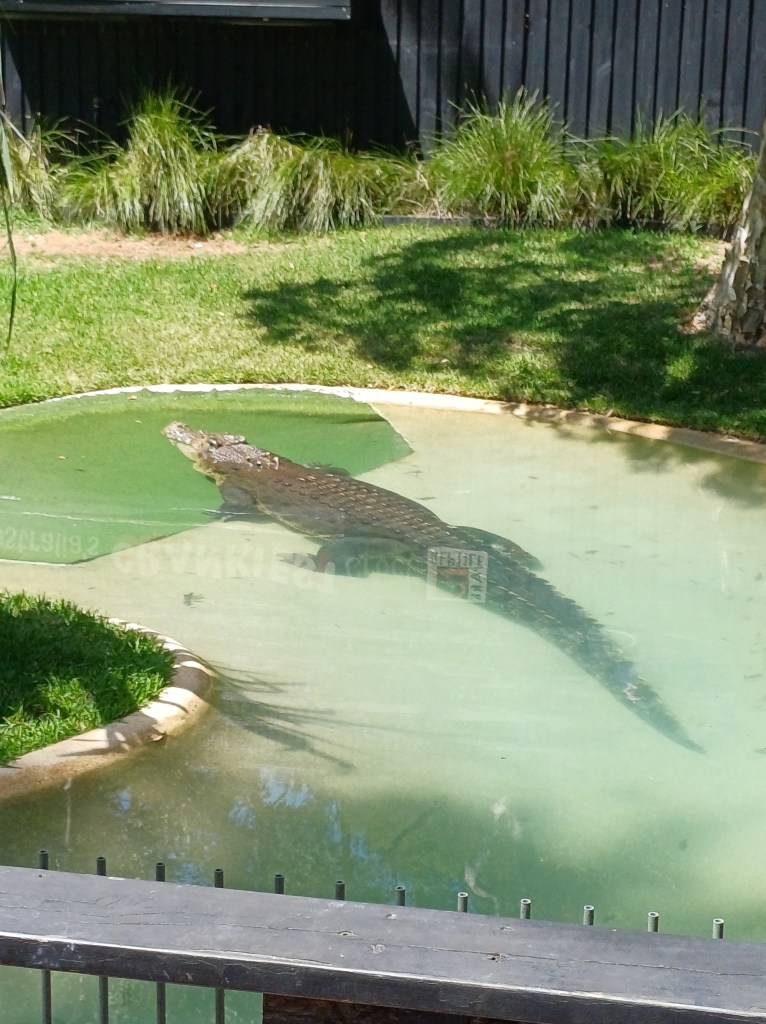
Crocodiles! Yes, let’s do this. I love a good croc.
Elvis who is featured in the image above was pestering fishermen in the harbour up in Darwin, Northern Territory. Crocodiles are aggressive beasts when territory is threatened, and its not uncommon to manage especially male populations to ensure the dynamics are stable, especially in places like Darwin where there are lots of people.
Elvis was relocated to a crocodile farm for breeding, where he bit the heads off two of his potential girlfriends. Yeah, fiesty guy. Thus you’ll see he has two fences in the image above. He was then donated to the Australian Reptile Park, where he has resided since 2007. Now he’s used to educate visitors of the park, performing daily feeding demonstrations. His jaws are insane, and hearing him clamp them shut was terrifying.
Crocodiles are a beast that no one could survive. This is why you stay out of rivers and away from beaches when you go up north. No amount of loud noises or attempting to look taller (for any North American readers who are familiar with bears) will save you. One catch, and Elvis will death roll you underwater until all oxygen has left your body. Then he’ll eat you in nice big chunks. Ooof.
One incredible feature of crocodiles is their ability to disappear underwater, showing no signs of presence. Then POP! They re-appear and strike. That’s why you don’t hang around near the waters edge up in the regions where they live. If you see a sign that says ‘Achtung!’ you take note and you get back in your car.
Saltwater crocodiles, however, have existed since the Pliocene, dating anywhere from 5.33 to 2.58 million years ago. These creatures have lasted in our environments for literally millions of years. They are a hypercarnivorous apex predator – the majority of their diet is meat so they are always on the lookout. Can you imagine just how many other species of animals have come and gone around them, yet these guys have stayed true? How incredibly strong must they be to adapt and survive such a timeline. They may be fierce, but you have to give them credit for their masterful longevity. As I’m writing up villains in my current novel it makes me think, have I given my villain enough staying power? Are they coming and going too quickly? Are they too easily defeated? I need to instill some of Elvis the crocs persistence.
For updates on my novel, short stories and general shenanigans, subscribe with your email below:
#3 the Inland Taipan
Also known as the ‘fierce snake’.
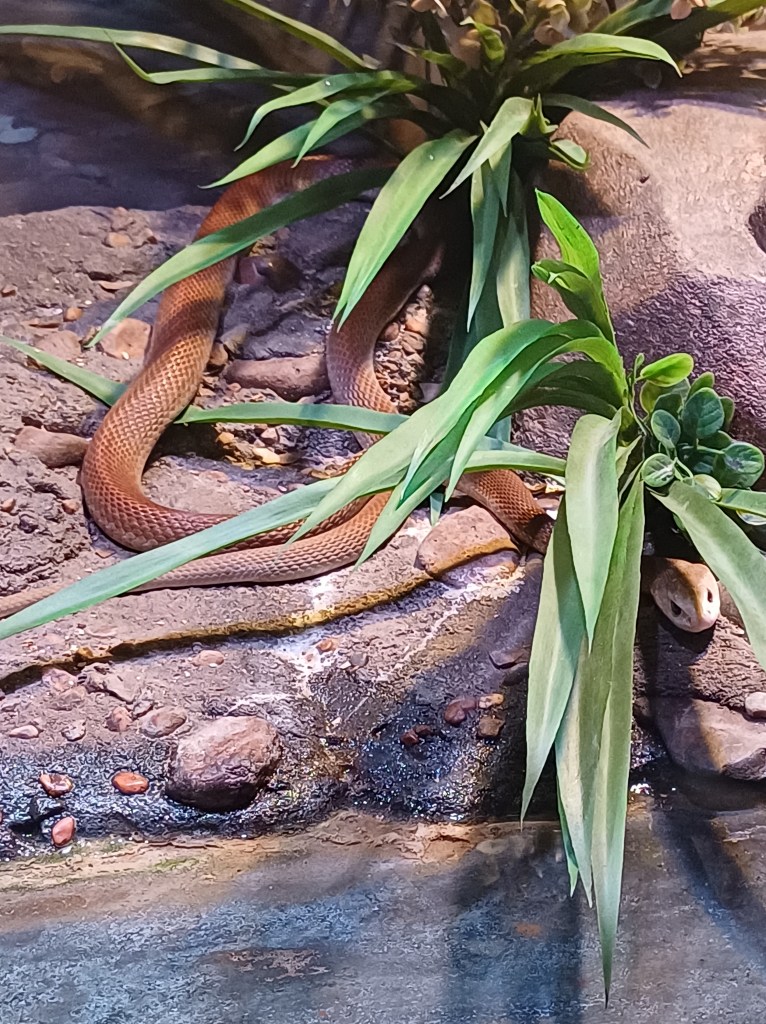
Most people have a view on snakes – stay as far away as possible.
Now, I do agree, especially if snakes are foreign to you, it is best to stay back. But when going on a bushwalk, most snakes will slither away when they hear your footsteps on the track (I like to stamp quite loudly as I hike haha). And like I mentioned previously, I’ve seen footage of a snake handler literally one step away from a snake who simply stood still, and the snake went on its merry way. Didn’t give a hoot!
The Inland Taipan is one of the most venemous snakes on the planet. They’re endemic to the central east regions of Australia (the same habitat as the previously mentioned Perentie), so if you visit the coast, you basically won’t ever get near one (phew!). They were originally identified in the late 1800s, but went unseen for about 90 years thereafter (shows how reclusive they really are). It’s been described as a shy, placid and reclusive snake, only acting out when provoked or when it feels trapped and unable to escape. When it does attack is lifts its front half up, creating a distinctive ‘S’ shape to display it’s incoming defence and potential attack.
But take a look at the image above. This creature has developed a habitat, lifestyle and defence system based on its isolation. If I came and knocked on your front door, threatening you, you would arch up too! They are a beautiful snake that has adapted to its environment, and they aren’t as villainous as they seem – only when provoked.
It’s worth noting that Indigenous Australian communities have lived peacefully with these creatures for tens of thousands of years. They are woven deep in cultural knowledge systems, language, stories, food and land management practices. This reciprocal relationship is built on deep respect. We can learn a lot from watching how Indigenous communities engage.
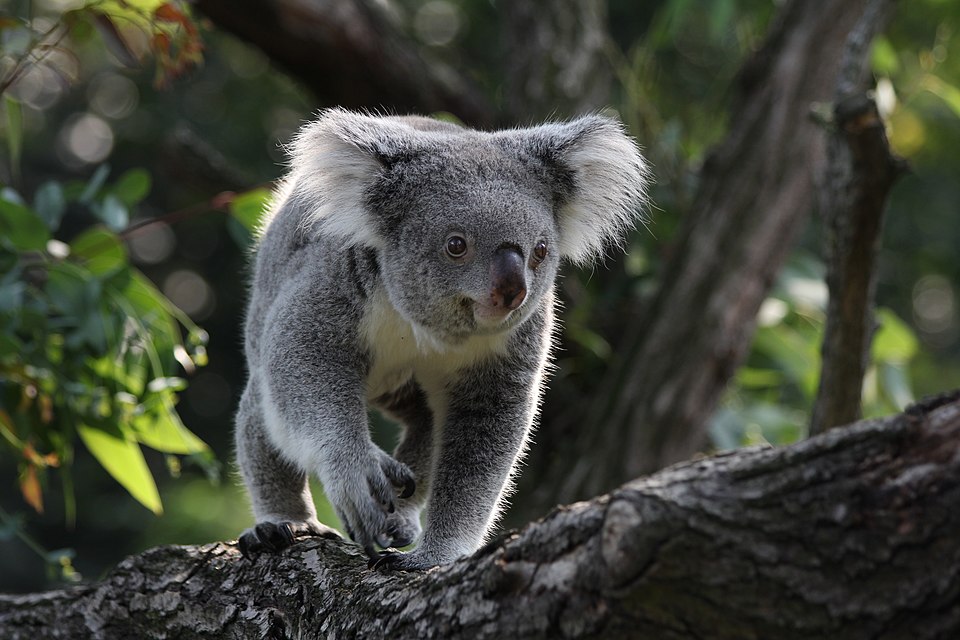
Image by Till Niermann
One final note
Those cute and fluffy koalas, the bouncing kangaroos, and the cuddly-looking wombats you know of? Well, you might want to think twice. Yes, in a zoo setting these animals are somewhat domesticated. But in the wild, each of the animals I’ve mentioned has a scary, unpredictable side. You never (NEVER) want to approach a wild koala – their claws can do some serious damage if they feel threatened by you. As for the kangaroos, ever seen them fight? They’ll lean back on their tail and give you a right whopping. And wombats can head butt! Just because an animal appears friendly, doesn’t mean they are.
This begs the question – does everyone have a villainous side? Do we all have the capacity to act out when placed under the right kinds of pressure? Perhaps villains are characters that have just been placed in a difficult or pressurised situation, forced to respond with the recources they have on hand.
Aussies have developed a balanced approach that focuses on the beauty of the animal, yes, but also the realities of their design, biology and evolution. They’ve been crafted by the various ecosystems our country boasts. When you look deep enough, you find the beauty. They really aren’t as bad as they’ve been painted.
Have a good week!


 Jess Knaus
Leave a comment